Reading Talent: Why Our Station Districts Deserve a Closer Look.
For EHRET+CIE, everything starts not with a plan, but with a question: What can this place become? Not every site suits every use — successful development builds on a location's specific qualities rather than forcing a concept onto it. That holds true for a single property just as much as for an entire district.
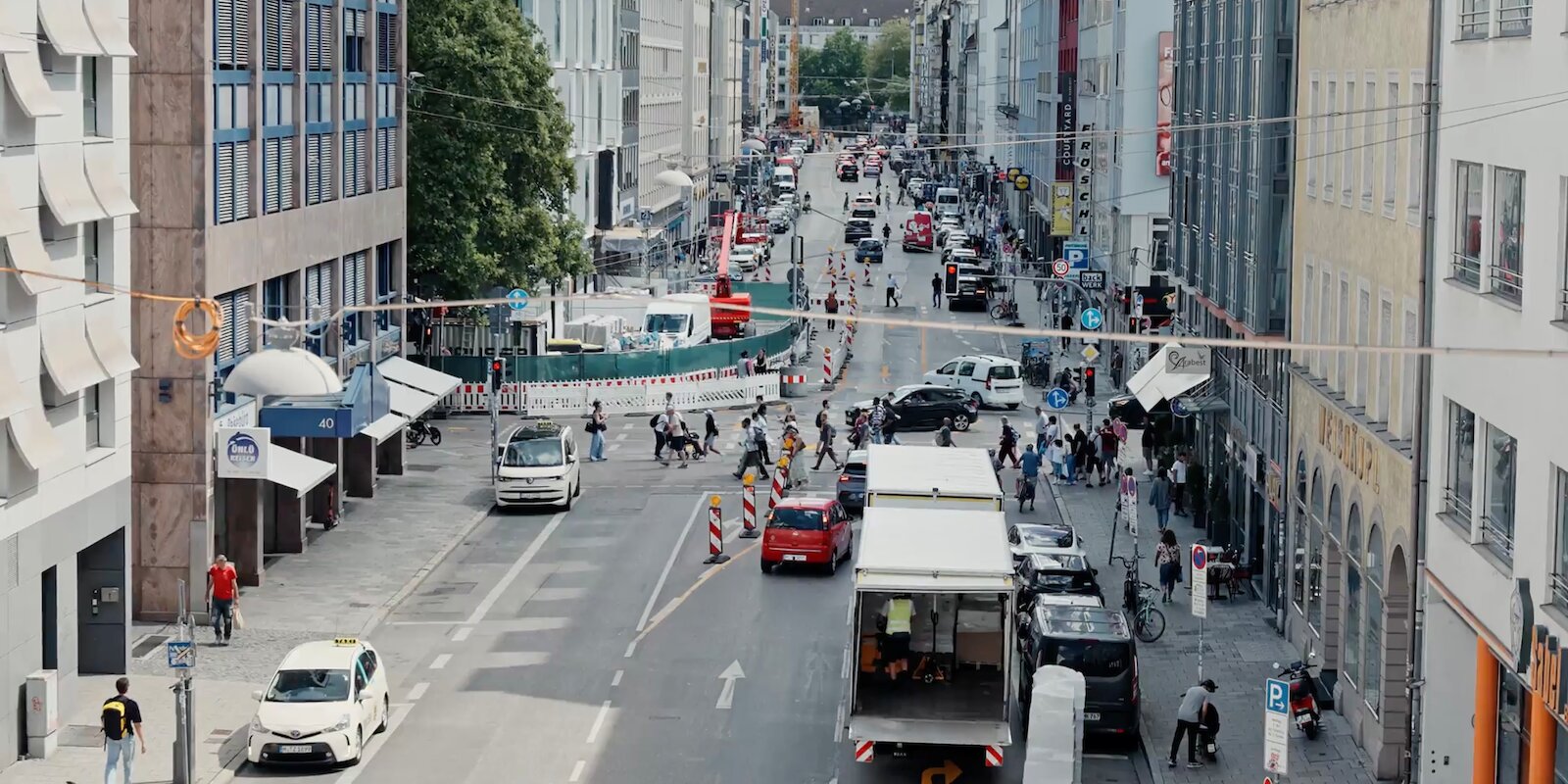
A look at Munich's station district (Bahnhofsviertel) shows how such talent can be read: arriving and departing, hypermobility, a place of creative minds and great diversity. At the same time, very different worlds and uses collide here within a small space. High pressure on land use, social tensions, and an at times fraught atmosphere in public space are as much a part of the district as its dynamism and distinctive urban energy. This is the subject of the new issue of urban.matters. Below are excerpts from the editorial interview Alexander Gutzmer conducted with Michael Ehret.
Alexander Gutzmer: Good morning, Michael. We're sitting in the station district. Coincidence?
No. At the table over there, I closed my first deal with investors back in 2009. And look — the café is still here. You look outside and see life, multiculturalism, openness to the world. The station district is actually a great calling card for the city of Munich. It shows what Munich can also be. A bit like in the 1970s. Back then, Munich proved it could be a hotspot — that high culture and subculture could exist here side by side. That spirit has been somewhat lost in the city at large, but it still shapes this district today.
Alexander Gutzmer: That's why we're making the station district the theme of our relaunched urban.matters, coming out for EXPO REAL.
Exactly. The station-district phenomenon isn't just a Munich story. In many cities, station districts are unloved children — flawed, rough around the edges. But also full of what makes a city a city. When we talk about real migration and lived integration, the station district is where that plays out. It's also a highly central point in every city — a place of maximum connectivity.
Alexander Gutzmer: And surely a space of opportunity too. But what can EHRET+CIE actually do to improve it? What do you bring that other developers don't?
An absolute understanding of the neighborhood. We really listen to the people here. And we give ourselves, them, and our projects the time to grow. We don't do pure trading — we allow real transformation to happen.
Alexander Gutzmer: And you shape transformation in districts and cities too?
Definitely — transformation doesn't succeed without active shaping. What matters here is the long-term perspective. We don't just want to explain visions; we want to accompany them through execution. Enabling is important, but just as important is the question: how do I actually implement something? And how do I learn along the way — so that even better outcomes emerge in the future?
Here's more on the station district: EHRET+CIE presents the newly relaunched issue of urban.matters on this topic at EXPO REAL.